Interrupting Overwhelm
Welcome to this week's 5-minute read on managing moments and seasons of overwhelm.
Last week's article on Interrupting Shame was a longer, in-depth read. This week, we're keep it short and sweet with plenty for you to reflect on personally. So let's talk about how we can healthily interrupt overwhelm without ignoring it and allowing it to lead to burnout and depression.
Is Overwhelm a Feeling?
Great question! To answer that, let's define emotions and feelings.
Emotions are experiences we have. They are automatic responses. They can be fleeting, transient or settle in for a while. When they do linger, we call this an emotional state.
Feelings are connected to our thoughts about the emotions we're experiencing. They are mental experiences and reveal how we are thinking about (or interpreting) the emotional experiences we have.
What's tricky in the English language is we often use the same word to describe an emotion and a feeling. For example, anger can rise up in us suddenly and 'flood' us as an emotional experience. It can also be something we feel when we are thinking about a situation and notice something that goes against our values, like injustice.
And of course, we have our body; somatic responses that we experience. We're not always aware of them, but we may be more aware of the effect they are having. Like our breath changing, feeling an unease or experiencing physical pain as can happen in moments of rejection.
In my Strengthen Emotion Discovery Wheel, I deliberately haven't listed Overwhelm in any specific emotion, feelings or state category. This is because overwhelm is our holistic response to overstimulation in some way.
We experience it as an emotional experience.
We experience it as cognitive overload.
We experience it in our body.
Sometimes we experience all of these, and at other times, overwhelm can become a chain reaction in us if we don't deal with what's stimulating that overwhelm.
Interrupting the emotional, cognitive, environmental and physical demand on us is key to preventing the intense stress response that we call overwhelm. And if we're already in a heightened state of overwhelm, noticing our different responses can help us to begin to find peace to release some of that load.
An invitation to reflect & notice:
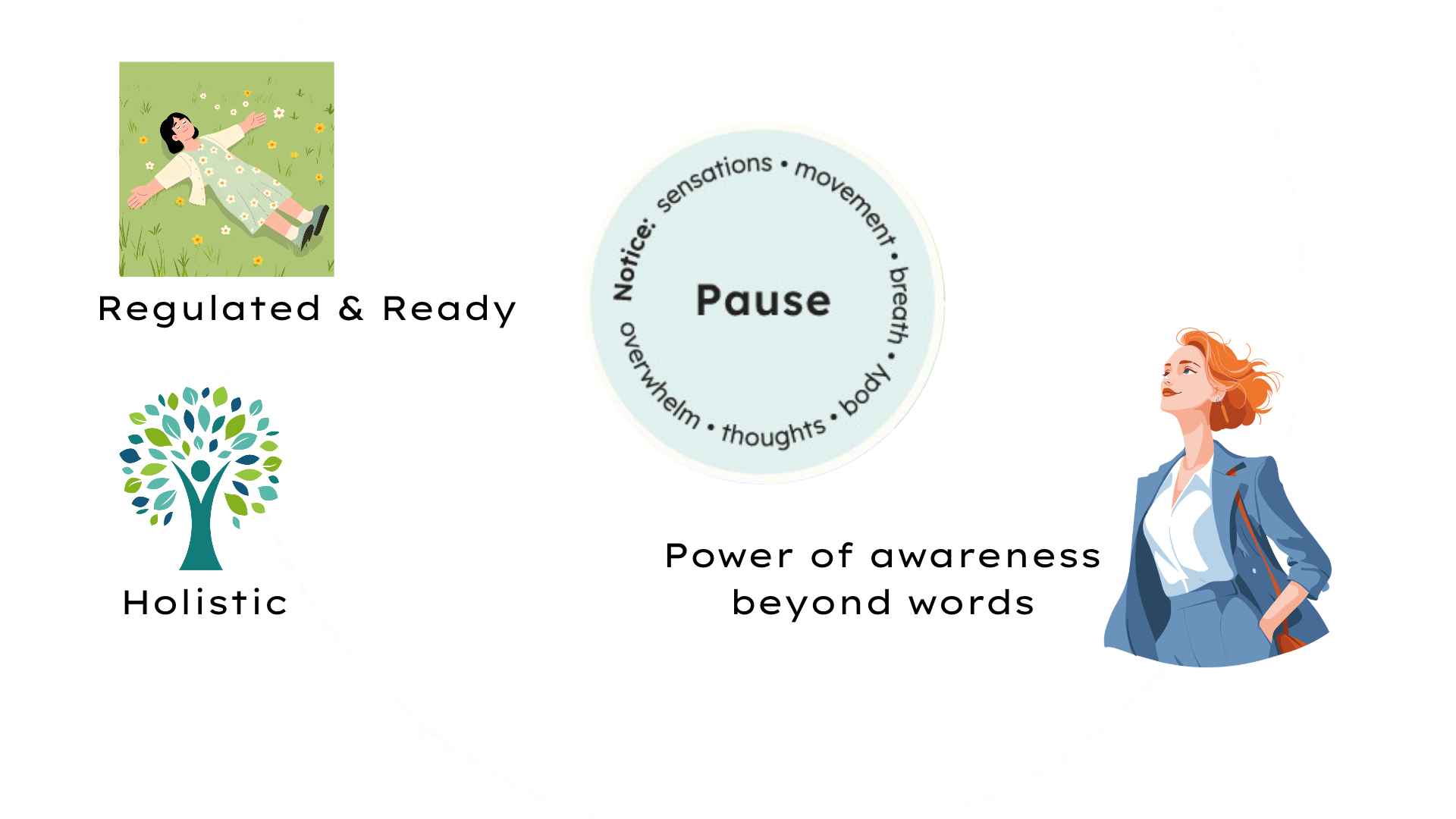
The central section of the Strengthen Emotion Discovery Wheel has the word Pause. It is surrounded by an invitation to notice our sensations, breath, body, thoughts, movements and overwhelm.
I invite you to take a few minutes (or set a future time to do this) and think about one of more of the following types of overwhelm that you've personally experienced. Think about how you were and what you experienced in that moment.
Here are the types of overstimulation that can lead to overwhelm:
1) Time, task & activity overwhelm
2) Emotional overwhelm
3) Sensory & environmental overwhelm
4) Information overload and overstimulation by excessive mental activity
5) Social and relational overwhelm
6) Decision overwhelm and fatigue
And here are the reflective questions to choose from or work through:
- Remember what you posture did, what sensations you had, how you were breathing, if you had any pain, were you stimming or moving in a particularly way and what thoughts came to you?
- Then ask yourself if any of these began to build up before you actually noticed the tipping point of overwhelm?
- Do any of your reflections give you clues how you personally could begin to regulated your whole being when overwhelm is building up? Not to gaslight the overstimulation, but to begin to find and create calm for yourself.
- What do you think provokes overwhelm in you personally and what might you be able to begin to put in place to manage that in future?
- Finally, what would you like to feel instead of overwhelm in those situations?
I hope you've found this article thought-provoking and helpful. I believe that when we make space to pause and notice our emotional experiences at times when we're not in the midst of them (as well as times when we are!) that we can uncover clues that help us manage our wellbeing. This is particularly useful for us people with alexithymia or rejection sensitivity dysphoria.
More Resources & A Discount Code for You:
Discover more about alexithymia here.
Download my free Introduction to Alexithymia here.
Curious about the Strengthen Emotion Discovery wheel? The info page on my website for the resource packs has had a glow up with a couple of videos added. Here's one that shows you more:
Coaches, therapists and wellbeing professionals grab yours here. Use code EMOTIONS15 at checkout for 15% off the purchase price:
Not a practitioner? No worries, this is for you and your household. Use code EMOTIONS15 at checkout for 15% off the purchase price:
I'm looking forward to welcoming you again next week!
Don't forget that subscribers here can comment on this article if you'd like to.
Andrea Urquhart