Emotions & The Brain: The Hand Brain Model

One key skill in emotion discovery work is understanding what 'triggers' us. We often call these survival responses. You might know them as fight, flight, freeze or fawn. When we're triggered, it's like being on high alert. So much so that we experience some big emotions like fear, panic and insecurity.
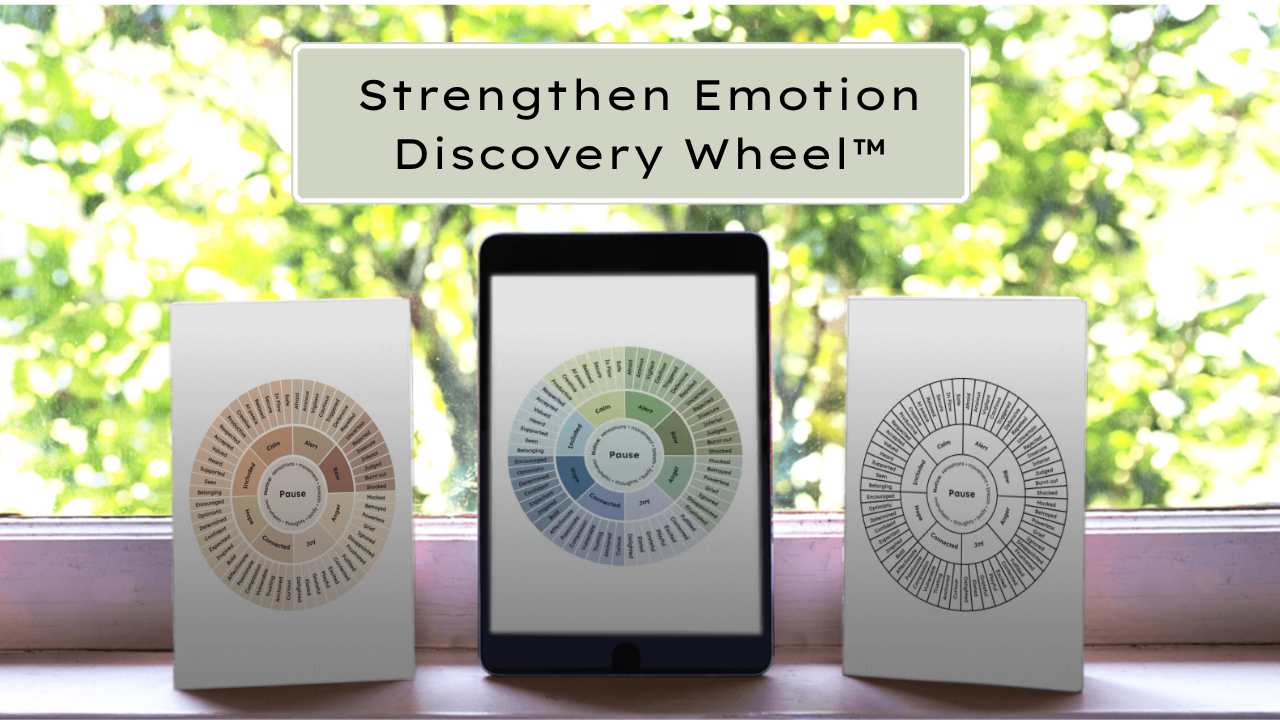
In the Strengthen Emotion Discovery Wheel, we have the Alert section. Although we haven't named them specifically in that section, it represents those survival responses. Instead of repeating fight, flight, freeze and fawn, I've included words that describe what we might experience or feel when we are in those responses. For example, feeling afraid is part of all four survival responses although we may show or hide our fear differently in each kind of response.
What's powerful for us all to understand and remind ourselves of regularly is that our big emotional experiences are linked to our brain's responses to what we're experiencing.
In my work with AuDHD (people who experience both ADHD and Autistic traits) women, I often use Dan Siegel's Hand Brain Model to help them have a visual understanding of when they are 'regulated' and what happens throughout the day as we experience different things and our brain is responding to them.
Watch this video of Dr Dan Siegel explaining this:
For my clients (and for myself too!) it's also good to remember that 'flipping your lid' can look different according to what's happening in and around us.
We may experience hypo-arousal or 'shutdown' which is more of an 'implosion' of feelings. We feel numb or disassociated from what's going on around us and in us, but it's still a type of overwhelm.
We may also experience hyper-arousal or 'meltdown' which is more of an 'explosive' or reactive response. This will look different for each of us, and it's important to recognise how you personally experience this because we're all unique!
Once we are more aware of how we experience hypo- and hyper-arousal, what's really useful is then thinking about what we experience in the moments and hours before that. Particularly in our bodies. This is where the Notice section of the Strengthen Emotion Discovery Wheel is really handy. We can work through the areas mentioned there and think about what happens in us in the lead up to 'flipping our lid'.
These moments of reflection and conversations can help us notice patterns. Those patterns can then help our awareness as we become more dysregulated. We can then think about what would help us notice that sooner and intervene.
The same goes for 'glimmers'; the things that make us feel good. Noticing our emotional journeys is powerful and empowering.
If you're a parent of work with children, watch this explanation of Dan Siegels' model by Mo Mindful:
If you've found this helpful and you're not yet signed up to my free email community here, why not subscribe now?:
Join the Strengthen Live email community here. You'll get occasional posts like these about Emotion Discovery topics straight to your inbox. You'll also be able to browse other posts here on our platform.
If you haven't discovered the Strengthen Emotion Discovery Wheel yet, it's a visual resource that encourages holistic, expansive conversations about emotional experiences, feelings, moods, patterns, values and what we really want.